

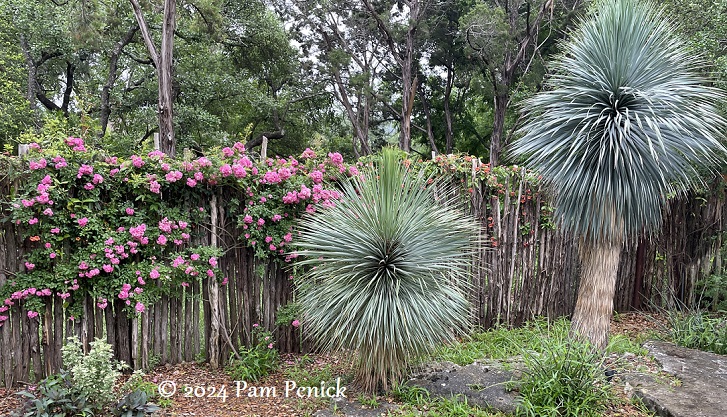
Circling back to my garden
April 24, 2024 I’ve been running around visiting gardens in Austin and beyond this spring, but every day I stop and breathe deep in my own garden, taking in the green freshness of the season. The Circle Garden view from the deck makes me particularly happy right now. Its graphic ...
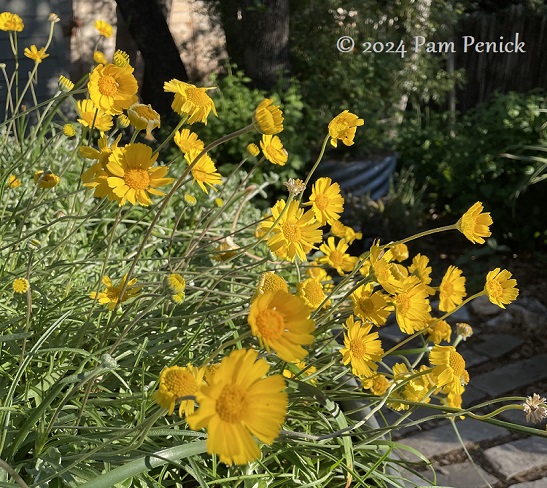
Spring in full swing in my garden
April 03, 2024 What a great time of year this is in a Central Texas garden. The days have been comfortable but not hot. The humidity is low. We’ve had a little rain but also plenty of sun. And the plants are racing with new growth and flowers. They’re feeling ...
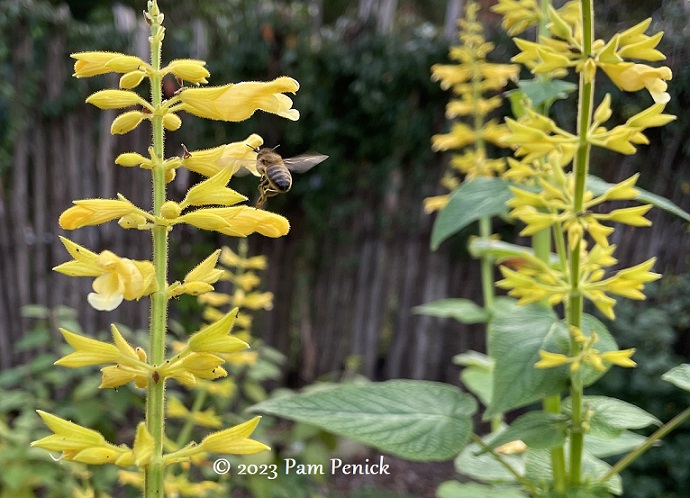
Christmastime flowers and no freeze yet
December 24, 2023 Here it is Christmas, and Austin has so far escaped a hard freeze. That plus mild temps and occasional rain showers means flowers, flowers, flowers! Like Mexican flame vine (Senecio confusus) delivering punchy orange petals to the elevated deck. Giant ligularia (Farfugium japonicum ‘Gigantea’) glows with yellow daisies ...
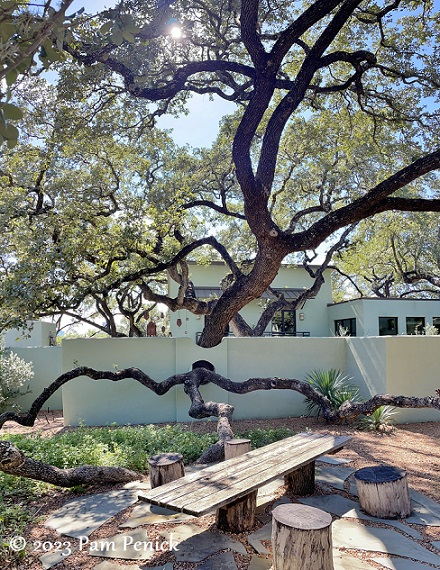
Linda’s live oak courtyard garden in San Antonio
October 18, 2023 After the tour of the Ten Eyck garden last Saturday, I visited my friend Linda Peterson’s garden, one of my favorites in all of Texas. Her garden is home to several charismatic live oaks, including this one with octopus-like arms stretching through a porthole cutout in a ...
October blooms brighten my garden
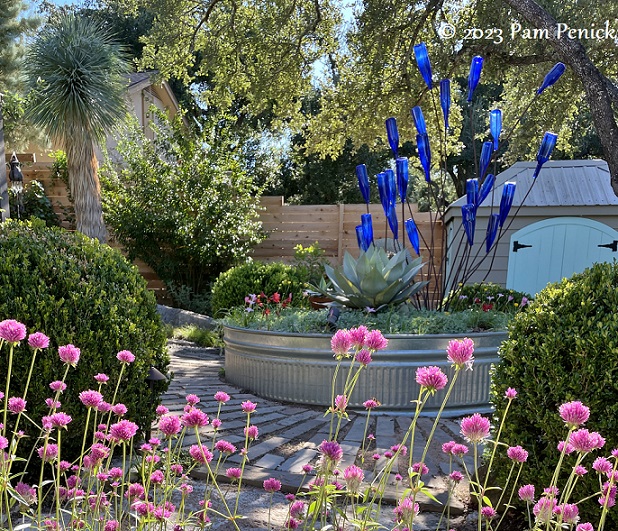
October 12, 2023 October! It’s the best month of the year, providing sweet relief from a Texas summer with cooler weather and rain and bringing the garden back to life. Let’s take a stroll ALL around the garden and see what there is to see. It’s oxblood lily season! These ...
Hot summer survivors and new book news
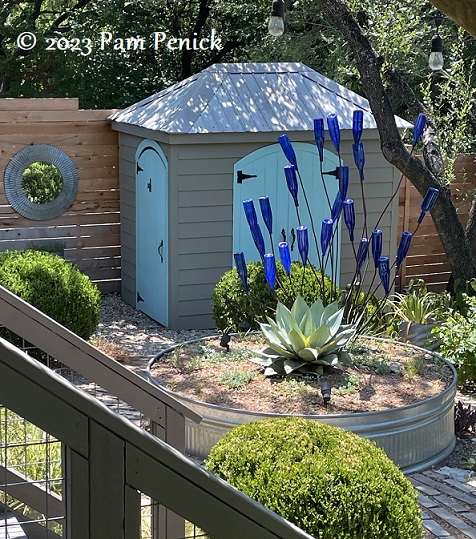
August 21, 2023 This summer, y’all. Am I right, my fellow Texas gardeners? But even with two months of surface-of-the-sun temps and zero rain, at least a few plants are happy. Like this pink-flowering mammillaria cactus that burst into silken bloom a few days after I gave it a deep ...
Surviving the record-breaking heat
July 20, 2023 Heat waves are everywhere all at once right now, and Austin too is broiling in the hottest July on record, according to KXAN. That’s saying something because last summer was incredibly hot. I felt sure, after enduring Snowpocalypse, last summer’s oven-like temps, and then February’s Arbormageddon ice ...
Flowers going up and coming down
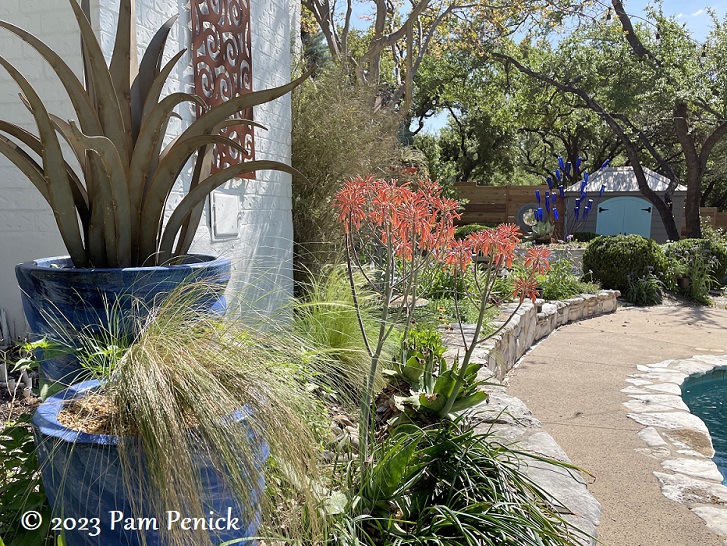
April 03, 2023 The first hummingbird appeared last weekend, zooming under the dangling red flowers of soap aloes. No surprise there. Those aloes put out quite the welcome mat for hummers. The spiderwort has had a good run — here’s a volunteer by the covered porch, looking pretty — but ...
Spikes and springtime
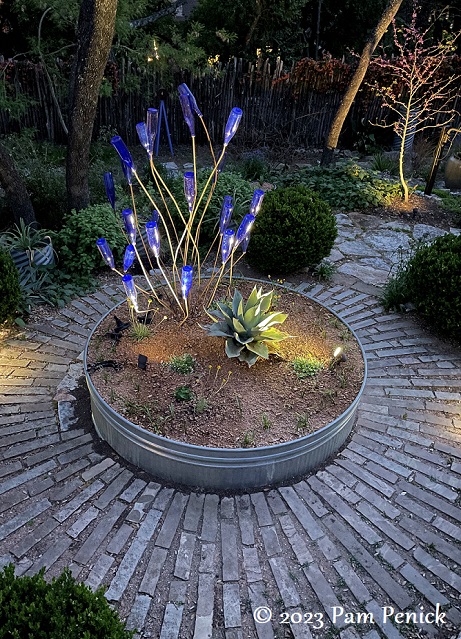
March 22, 2023 Spiderwort (Tradescantia occidentalis), a self-sowing native and a springtime beauty, continues to color my shady spaces purple. Its bee-feeding flowers open at dawn and close in the early afternoon, except on cool, cloudy days, when they may stay open all day. More flower spikes line the raised ...
Crossvine trumpeting spring’s arrival
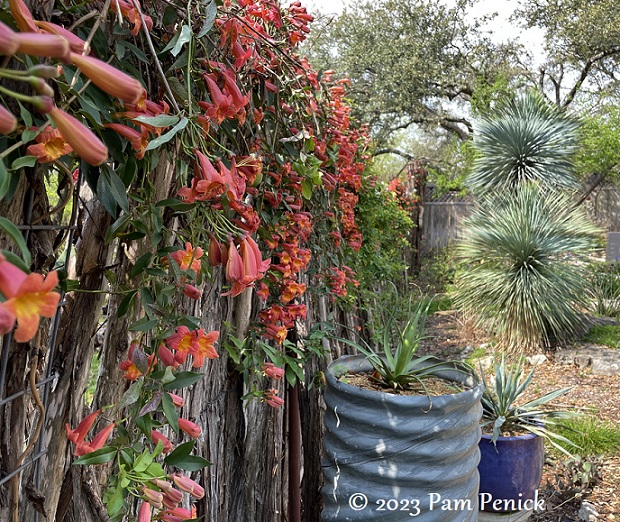
March 12, 2023 Of all the vines that grow well with little care in Central Texas, ‘Tangerine Beauty’ crossvine (Bignonia capreolata ‘Tangerine Beauty’) may be my favorite. This spring-flowering beauty blushes with abundant orange blossoms with golden centers, and the vine is semi-evergreen in winter too. It has always bloomed, even ...
Garden stirrings
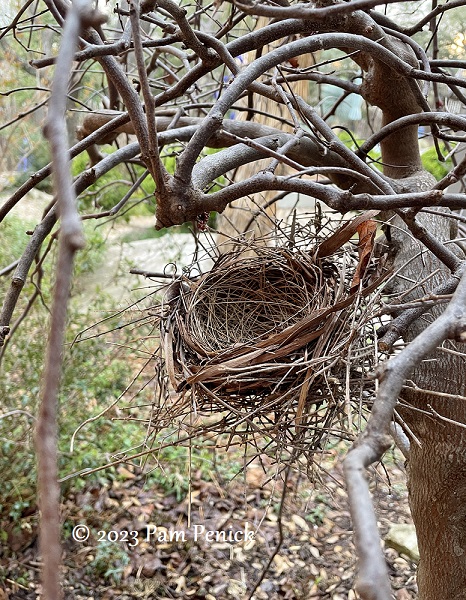
February 27, 2023 The freeze-damaged aloes (Aloe maculata) may have lost most of their fleshy arms, but check this out: they’re sending up flower spikes for spring anyway. Go, aloes, go! Here’s another one with just a couple “limbs,” but look at the size of that flower spike. These plants ...
Late-winter flora and fauna on my 17th blogiversary
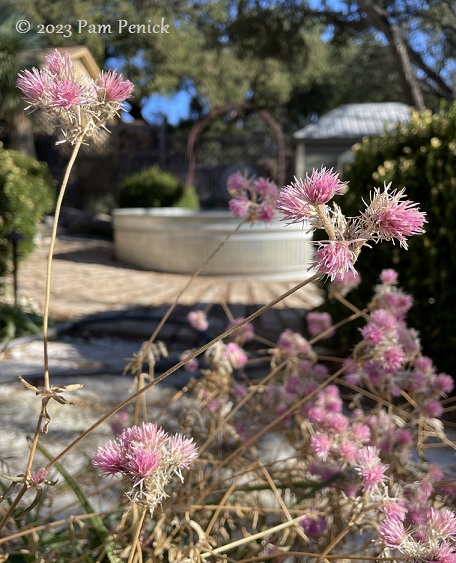
February 14, 2023 ‘Fireworks’ gomphrena gone to seed On Valentine’s Day 2006 I hit publish for my very first blog post. Back then I saw blogging as a way to document my garden through the seasons and to join the online conversation about gardening in Austin. Boy, was it ever! ...
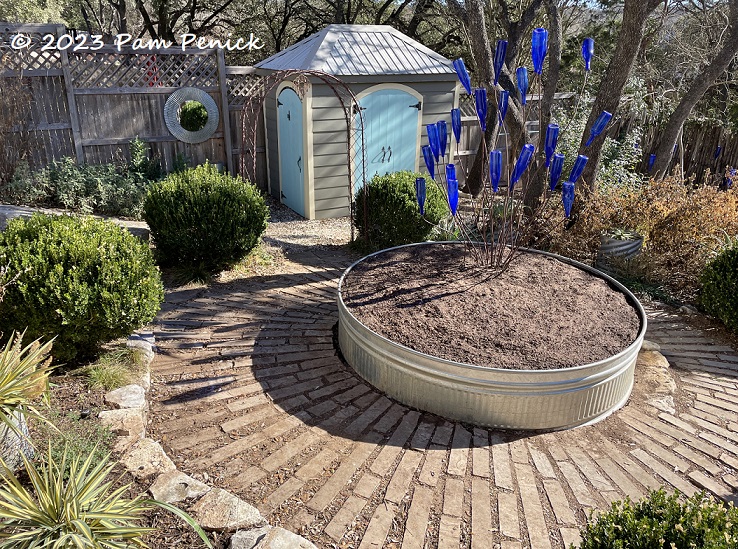
Stock tank returns to the Circle Garden – as a planter!
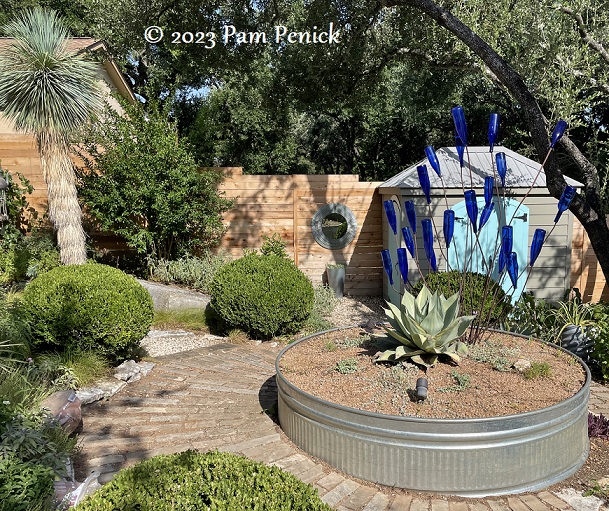
January 18, 2023 Happy 2023! I’m back from a holiday blogging break, but during the past three weeks I wasn’t just baking, wrapping presents, hanging out with family, and putting away holiday decor. I’ve been outside. A lot. Ripping things up. In fact the cool months are my favorite season ...
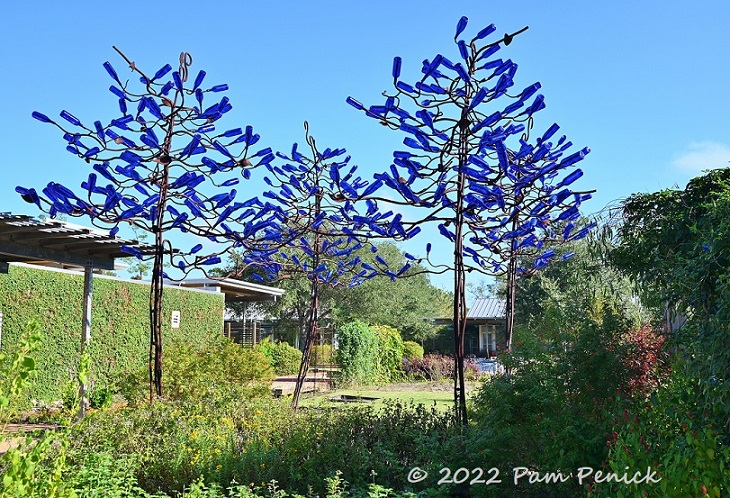
Shangri La Botanical Gardens, a garden fairy tale
December 15, 2022 Dancing Sisters bottle tree sculpture at Shangri La Sleeping Beauty has nothing on Shangri La Botanical Gardens & Nature Center. Located in the small town of Orange, Texas, just across the Sabine River from Louisiana, Shangri La’s very existence is in some ways as fantastical as the ...
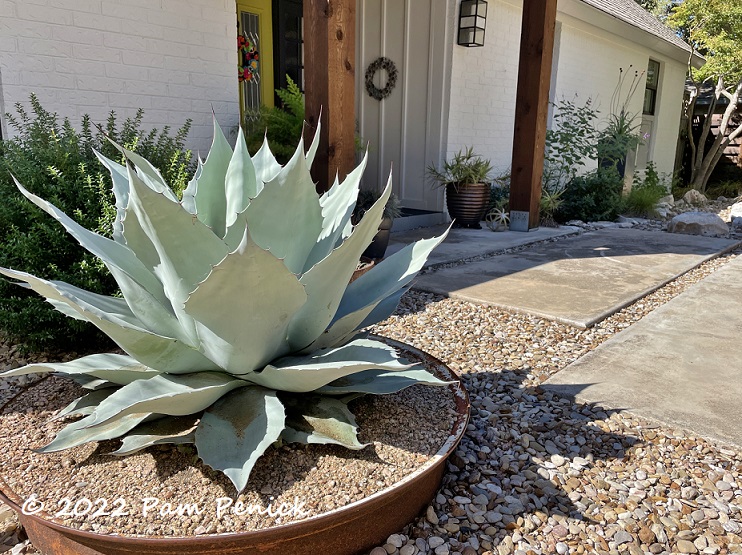
Spotlight around the garden
November 09, 2022 Before Halloween I took a few photos of whatever caught my eye, starting with the whale’s tongue agave in the tractor-rim planter. Hello, gorgeous! Somebody is watching me from the far end of the Berkeley sedge lawn. Hello, deer. Oh, and the Wheeler’s sotol that replaced the ...
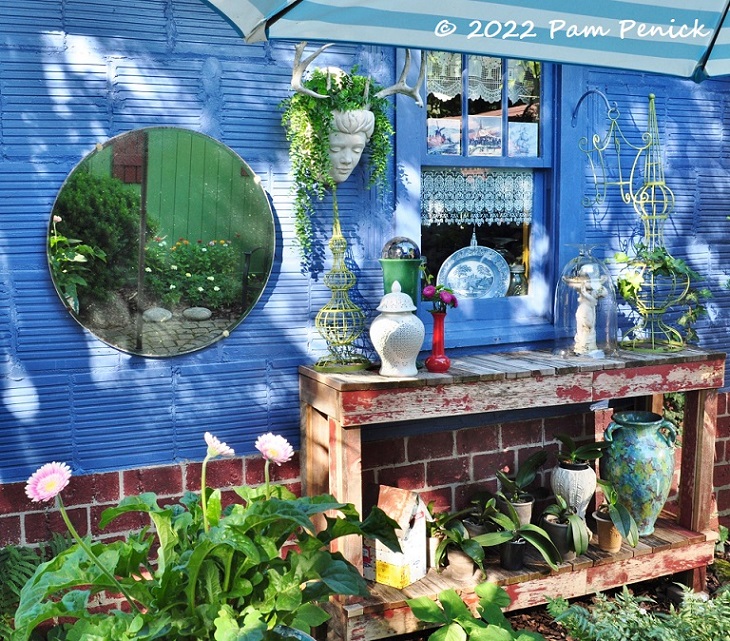
A garden on wheels and colorful decor convert driveway into patio garden
August 03, 2022 When you arrive at a purple Victorian-style house on a Rainbow Row, with a dozen planetary-painted bowling balls tucked amid foundation ferns and coleus, accented by jewel-toned bottles on a bottle tree — well, you know you’re in for a tour of a fearless color-lover’s garden. Such ...
