

2008—A Year in the Garden at Digging
December 30, 2008When 2008 began, I was frenziedly planning for a little shin-dig we dubbed the Garden Bloggers Spring Fling. As the year closed, I found myself saying goodbye to my beloved garden and starting over at a new house in a different part of town. The two events arose ...
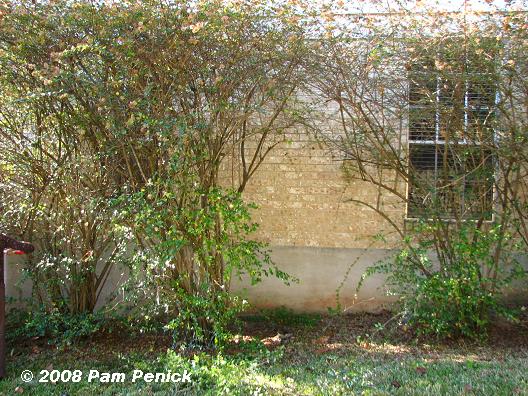
Waiting for go-dough
December 29, 2008 If you read Digging regularly, you know that I’m starting over with a new garden at a new house in Austin this winter. You may also know that I have a garden design business for do-it-yourselfers, and I’m always advising clients to pace themselves with a new ...
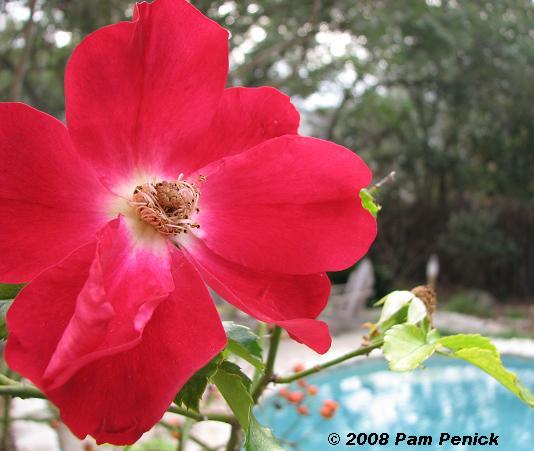
Roses and appendicitis on Christmas
December 27, 2008 We spent Christmas in the hospital. While I tell you the tale of my husband’s appendicitis, here are the roses that were blooming on December 25th, just as I’d hoped they would be a few weeks ago. My husband woke up on Christmas morning with a stomachache ...
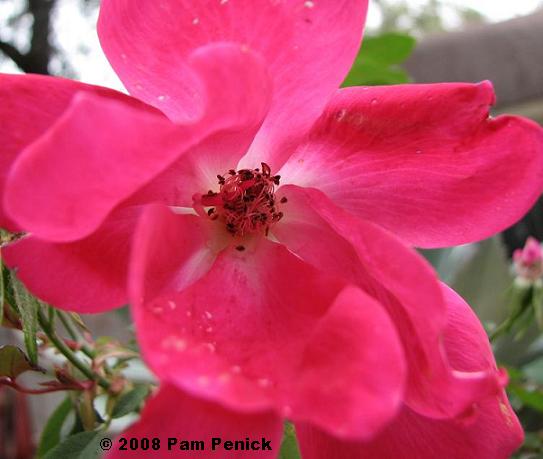
Hot and cold Bloom Day
December 15, 2008 A roller-coaster of hot and cold winter temperatures suits me better than just flat-out cold, but, boy, is it confusing—to the gardener as well as the plants. Yesterday afternoon I cut back poorly placed foundation shrubs while my husband pulled down fig ivy that was threatening to ...
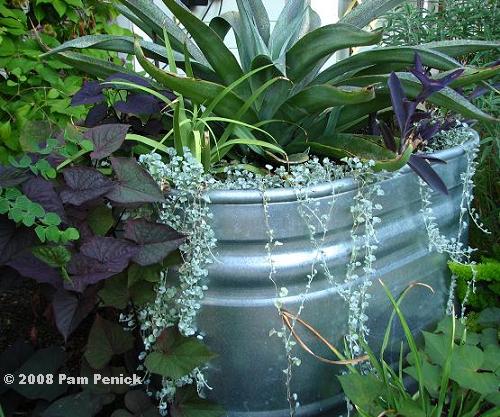
Using stock tanks in the garden
December 12, 2008 Lately an unassuming container made for ranch life has been appearing in creative and stylish urban gardens: the stock tank, or cattle trough. It’s Old Texas meets New Texas, and boy howdy, it works. Warehoused among poultry feed, hog fencing, and deer corn at farm-supply stores like ...

Sleet and snow in Austin
December 10, 2008 No joke! Yesterday it was warm enough to induce sweating as I worked in the garden (78 F / 25 C), planting some of my raided plants. A cold front swept in around 2 pm, and by that evening it was sleeting. And then snowing! The ssssss ...

Japanese maple on fire
December 09, 2008 Just a couple months ago, when we moved into the new house, I wondered what color the Japanese maple would turn in the fall. My question has been answered quite satisfactorily this week. Red! Even yesterday there was a tinge of green around many of the leaves ...

Raiding the old garden
December 04, 2008 A toasty 80 degrees (26.6 C) yesterday dropped by fifty degrees overnight. Today it’s blustery and sunny in the 50s (11 C), and central Austin may get its first freeze tonight. Of course, the warm weather yesterday lured me to the nurseries, where I picked up another ...

Red and butter
December 02, 2008 Aside from the red roses I showed you yesterday, the red Autumn sage (Salvia greggii ) is also blooming. Not as prolifically, mind you, but there’s some color. The skittish sulphur butterflies continue to flutter in for its nectar. This airy, little plant was growing under the ...

Red roses at Christmastime
December 01, 2008 Wouldn’t it be lovely to have red roses at Christmas? I don’t know if these will last that long, but here on the first day of December, a dozen red roses bloom flamboyantly on ‘Dortmund.’ My garden has yet to experience a freeze, and though temperatures are ...

Giving thanks in the garden
November 25, 2008We celebrate our national day of Thanksgiving on Thursday, but I believe gardeners give thanks all year long. We give thanks for fleeting moments of beauty. We give thanks for seasonal changes that remind us to be grateful for each moment we’re given. And we give thanks for ...

Sunny days and butterflies
November 19, 2008 At this time of year Austinites reap their reward for having survived another summer. Bright blue skies washed clean by periodic cold fronts top a burnished landscape of evergreen live oaks, yaupon hollies, junipers, agaves, and evergreen salvias like the one favored by a sulphur butterfly’s visit ...

Little green men
November 12, 2008 Watering new plants is pleasurable because it gives you a good excuse to be out there with them, making sure they’re settling in, admiring them once more. But watering established plants is a chore, and an increasingly expensive one at that. So I like to use drought-tolerant ...

Razzle-dazzle reds
November 11, 2008 Other regions have razzle-dazzle reds up high, among the autumn leaves. Mine are much closer to the ground. The Knock Out ‘Radrazz’ rose I moved from my old garden is settling in and opening the first of a dozen buds. I love this clear red flower and ...

Transplanted & tanked up
November 10, 2008 Last week I finally got the transplants from my old garden, plus a few new plants, into the raised beds I’d cleaned out recently. Today I finished mulching—the desert plants in decomposed granite, the others in shredded hardwood mulch. And since I couldn’t feel at home in ...
Transplanted & tanked up
November 10, 2008 Last week I finally got the transplants from my old garden, plus a few new plants, into the raised beds I’d cleaned out recently. Today I finished mulching—the desert plants in decomposed granite, the others in shredded hardwood mulch. And since I couldn’t feel at home in ...
