

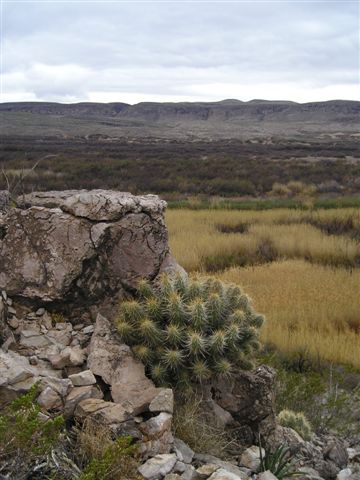
"Giant" country in Big Bend National Park
December 31, 2006 Ridge view at Big Bend. Photo by Dave and Shelley. Over Christmas, my friends Shelley and Dave and their daughter drove 10 hours to Big Bend National Park, located in remote southwest Texas and tucked into a wide curve of the Rio Grande. Four hundred and seventy-four ...
“Giant” country in Big Bend National Park
December 31, 2006 Ridge view at Big Bend. Photo by Dave and Shelley. Over Christmas, my friends Shelley and Dave and their daughter drove 10 hours to Big Bend National Park, located in remote southwest Texas and tucked into a wide curve of the Rio Grande. Four hundred and seventy-four ...
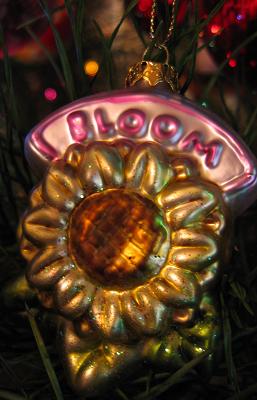
New Year's resolutions
December 30, 2006 I was pleased to notice that Annie in Austin was one of several local gardeners interviewed by the Austin American-Statesman for an article today on gardening resolutions. She resolved, “In 2007, I’ll try to spend as much time actually working in the garden as I spend photographing ...
New Year’s resolutions
December 30, 2006 I was pleased to notice that Annie in Austin was one of several local gardeners interviewed by the Austin American-Statesman for an article today on gardening resolutions. She resolved, “In 2007, I’ll try to spend as much time actually working in the garden as I spend photographing ...
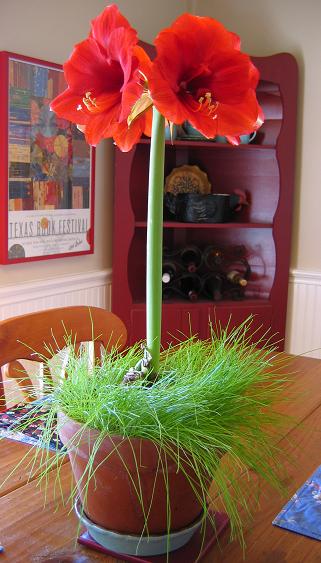
Red trumpets
December 22, 2006 Four red trumpets on the amaryllis add Christmas cheer at the table. We got home after dark last night, lugging our suitcases and Disney souvenirs into the chilly house. When I switched on the light over the dining table, the blazing amaryllis greeted my eyes. Ka-pow! I ...
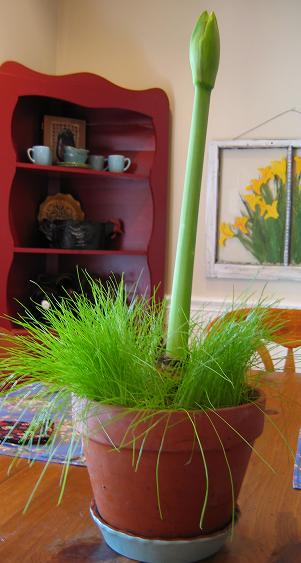
Still waiting . . .
December 14, 2006 It’s been a week since I brought home this amaryllis, and I’m still waiting for it to reveal itself. The stalk has grown a few inches, and a split has appeared at the top of the bud, so it’s close. I feel a bit like a kid ...
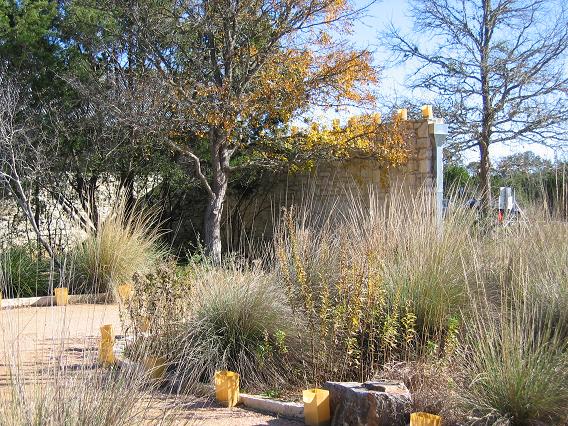
Winter wonderland at the Wildflower Center
December 13, 2006 This is what winter looks like in Austin: autumn leaves persistently hanging on, ornamental grasses bending in a north breeze, evergreen live oaks and cedars (junipers, actually), and bright blue skies. It may not be everyone’s idea of a winter wonderland, but I love it. I visited ...

Lions, oh my!
December 13, 2006 I received a handout at the Lady Bird Johnson Wildflower Center in southwest Austin yesterday: Dear Visitor, We have reports of a possible mountain lion sighting at the Lady Bird Johnson Wildflower Center. Mountains lions are native to the US and are natural to Central Texas (but ...

Early present
December 08, 2006 I bought myself a “wrapped” present yesterday: a potted amaryllis of unknown color. I’ve often considered buying an amaryllis but resisted the impulse. At this time of year, I’m busy Christmas shopping, and an amaryllis bulb has always seemed an extravagance I just didn’t really need. But ...

O Tannenbaum
December 03, 2006Early Friday morning we got our first real freeze, and another light freeze is expected tonight. Then it should warm up for the rest of the week, so I plan to uncover the tender potted plants tomorrow and maybe prune back the frost-nipped basil, yellow bells, and Salvia ...

What a difference a day makes
November 30, 2006 Neighbor’s sycamore—pretty good fall color for Austin Yesterday’s high temperature was a humid 80 degrees. With all our windows open, we tried to catch a slight breeze and not resort to air conditioning in November. Yesterday the neighbor’s sycamore hung onto its orange leaves, its white limbs ...

Town Lake love affair
November 27, 2006 Smooch! On Sunday afternoon we drove downtown, parked under MoPac, and walked the 3-mile loop around Town Lake. Reds, oranges, yellows—the trees along the lake blazed with color. Well, they blazed by Austin’s standards. It was a gorgeous day—about 79 degrees and partly cloudy—and we strolled along, ...
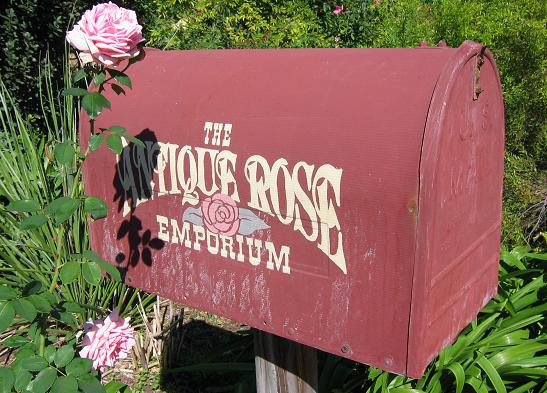
Nursery tour: The Antique Rose Emporium
November 13, 2006 My weather wish was granted over the weekend: cool temperatures, blue skies, decidedly fall-ish weather. It was perfect for a Saturday trip to Independence, Texas, and a pilgrimage to the Antique Rose Emporium. Along with Barton Springs Nursery and Natural Gardener, it’s one of my favorite nurseries ...

Where did fall go?
November 09, 2006 A queen butterfly on blue mistflower Here in Austin you take fall color wherever you can find it. It’s slim pickings for leaf-peepers, but at ground level things are happening. Perennials rebloom after biding their time through the summer. Migrating orange monarchs and other butterflies arrive. Pecans ...

Nursery tour: Natural Gardener
November 05, 2006 In the spirit of my recent Open Days tour, I took my camera along during an afternoon trip to Natural Gardener nursery for a pot of oxalis. It was a simple enough errand, and the cool, gray skies made a tour of the nursery’s gardens very appealing ...
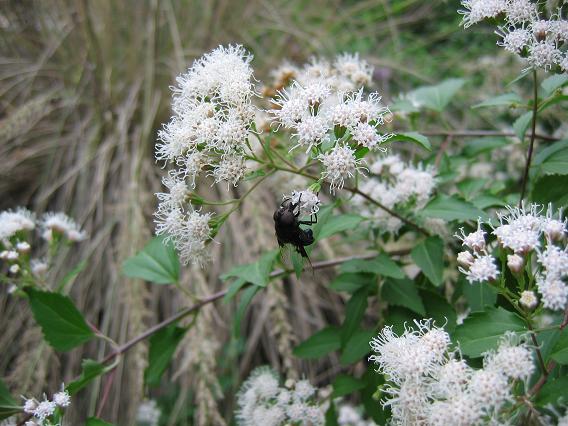
Plant This: White mistflower
November 04, 2006 Ageratina havanensis In the afternoon, my front garden is redolent with white mistflower, also known as white shrubby boneset, a Halloween-sounding name if I ever heard one. Its fragrance is not sweet but spicy and earthy. During the day, bees frolic in its sprays of white flowers ...
