


Inside Austin Gardens Tour 2012: Renee Studebaker Garden
October 12, 2012 On our sneak preview of the upcoming Inside Austin Gardens Tour, hosted by the Travis County Master Gardeners, the Austin garden bloggers got to visit the garden of one of our own: Renee Studebaker, formerly blogging for the Austin American-Stateman at Renee’s Roots and now at Renee’s ...

Inside Austin Gardens Tour 2012: Ann and Robin Matthews Garden
October 11, 2012 I’m continuing my sneak preview of the upcoming Inside Austin Gardens Tour, hosted by the Travis County Master Gardeners. In my last post I showed you Donnis Doyle’s colorful, whimsical garden. This garden belongs to her next-door neighbors, Ann and Robin Matthews, and they’ve been friends and ...

Inside Austin Gardens Tour 2012: Donnis Doyle Garden
October 10, 2012 The Austin garden bloggers recently got a sneak preview of the upcoming Inside Austin Gardens Tour, hosted by the Travis County Master Gardeners. We visited 5 gardens, and I hope to be able to show them all to you before the tour date on October 20th. I’ll ...

Garden Conservancy’s Open Days Austin tour coming Nov 3rd
September 23, 2012 Every other year in autumn, a handful of Austin’s most elegant and beautiful gardens open to the public as part of the Garden Conservancy’s Open Days Program. Not all states are as fortunate as Texas in having Open Days tours—in 2012, 19 states will host an Open ...

Livestrong HQ garden a model of green landscaping
September 05, 2012 It’s not about the bike. What it’s about is this—cancer survivor, superstar bicyclist, and Austin resident Lance Armstrong put his fame and influence to good use in the fight against cancer, founding Livestrong (formerly the Lance Armstrong Foundation) in 1997 to improve the lives of those affected ...

Stylish xeric garden by Sitio Design
September 04, 2012 My friend Curt Arnette, the talented landscape architect at Sitio Design and plant lover whose personal garden I visited in May, designed this contemporary gravel garden for a Westlake client, and I recently got to take a peek. The lot is wooded and steeply sloped and the ...
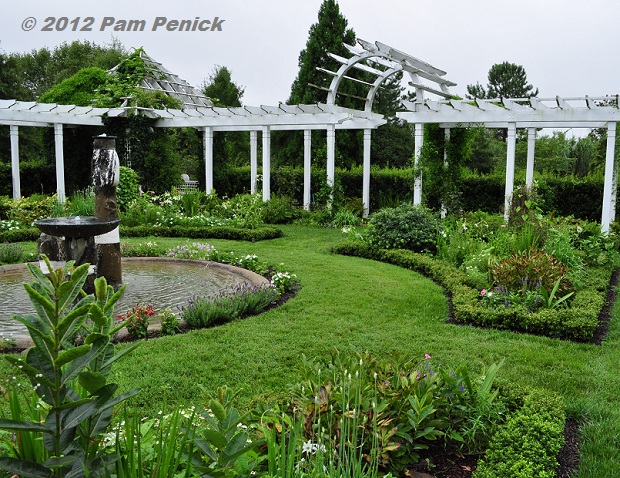
Romantic gardens of Fearrington House, North Carolina
August 22, 2012 Lovely strolling gardens wrap all sides of the country inn at Fearrington Village, near Chapel Hill, North Carolina, which I visited earlier this month. I spent a happy hour early one morning exploring its grounds, which include an English-style white garden, an herb garden, shrub borders, and ...
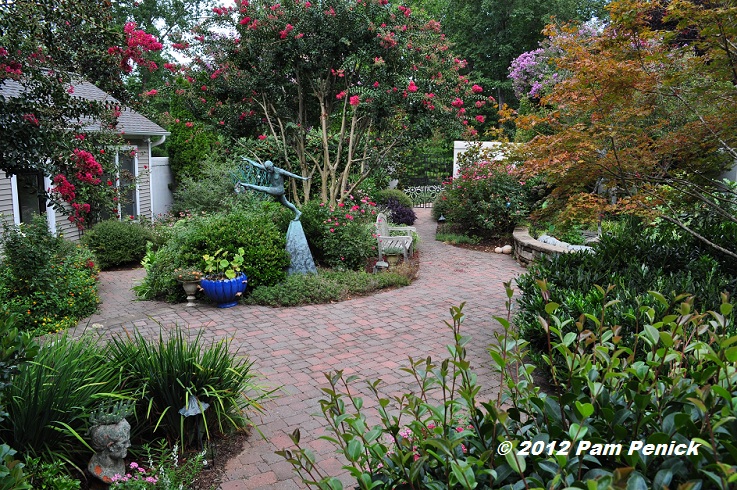
Dad’s North Carolina garden for Bloom Day
August 15, 2012 Last week I took a quick trip to central North Carolina to visit my dad, who lives in the charming Fearrington Village planned community. (Pics of the Fearrington House Inn garden coming soon.) Many of his neighbors—and this is a neighborhood of retirees—have opted out of extensive ...
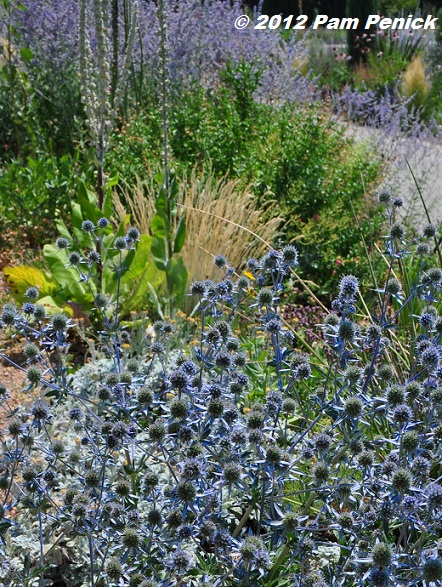
Visit to Denver Botanic Gardens: Water-Smart Garden, Wildflower Treasures & more
July 19, 2012 It seems kind of stay-at-home-ish to admit that my absolute favorite garden at Denver Botanic Gardens, which I visited earlier this month, is the one that looks almost like it could be in central Texas—with the addition of conifers and an intensity of color that we rarely ...
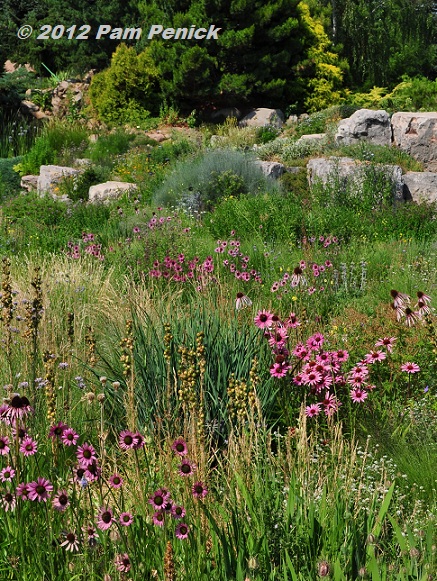
Visit to Denver Botanic Gardens: Plains Garden, Rock Alpine Garden & Dryland Mesa
July 18, 2012 The more naturalistic, dryland gardens were my favorite parts of Denver Botanic Gardens, which I visited earlier this month. By naturalistic I don’t mean, of course, that these gardens are any less designed. They are beautifully designed, and the high-country plants growing in them sparkled in the ...
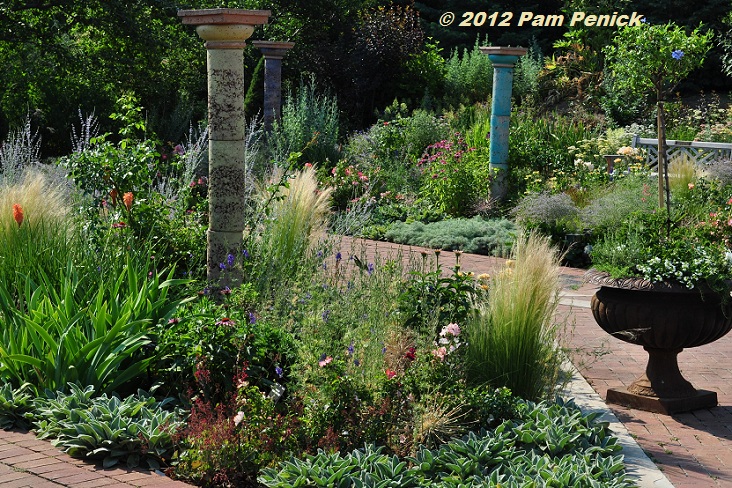
Visit to Denver Botanic Gardens: Romantic Garden & more
July 17, 2012 The Romantic Garden at Denver Botanic Gardens, which I visited earlier this month, is not festooned with the traditional roses, wisteria, and clematis. In dry, high country style, feathery grasses mingle with aromatic salvias, prairie wildflowers, and felt-leaved lamb’s ears. Accenting the garden beds stand a handful ...
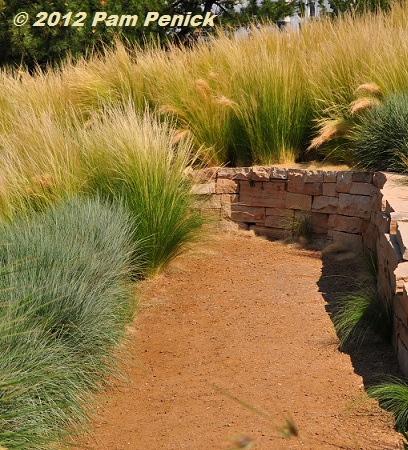
Visit to Denver Botanic Gardens: Grasses & cholla for Foliage Follow-Up
July 16, 2012 Yesterday’s post about my recent visit to Denver Botanic Gardens was flower-powerful in honor of Bloom Day. Today, for Foliage Follow-Up, I’m focusing on a hillside swath of two grasses and a prickly southwestern native, both of which thrilled me—meaning I took lots of pictures. Fab foliage, ...
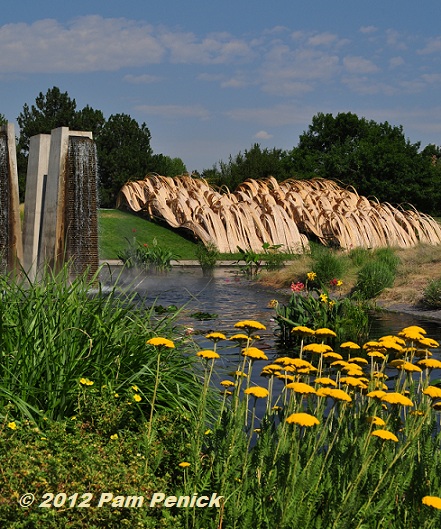
Visit to Denver Botanic Gardens: Sun-drenched perennial borders
July 15, 2012 Before vacationing in Rocky Mountain National Park earlier this month, we stopped in Denver to visit the Denver Botanic Gardens, which I’d long wanted to see. Though the day grew hot, reaching 100 degrees F, the gardens did not disappoint, glowing with high-country color against a bright-blue ...

Southwestern plants, French style & tropical verve in the garden of Curt Arnette
June 12, 2012 Landscape architect Curt Arnette, of Sitio Design, is one of the best and yet most modest garden makers you’ll meet in Austin. Back when I was a newbie gardener, breaking ground at our first house in Austin, he and his wife Melisa were our across-the-street neighbors. What ...
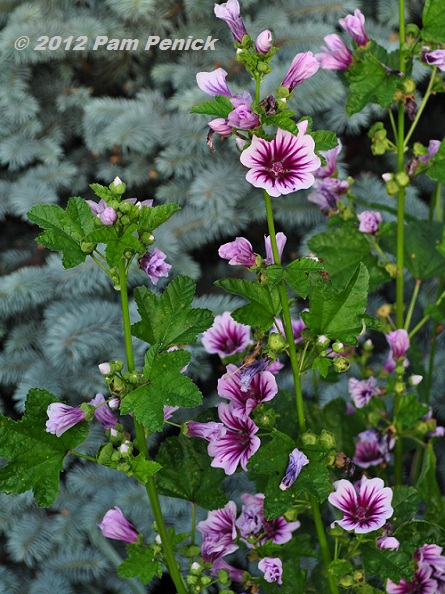
White Gate Inn’s charming garden and goodbye Asheville Fling!
June 03, 2012 While not an official part of the recent Garden Bloggers Fling in Asheville, North Carolina, the garden of the White Gate Inn, just down the street from our hotel, was suggested as a must-see if we had any spare time. So one morning I got up early ...
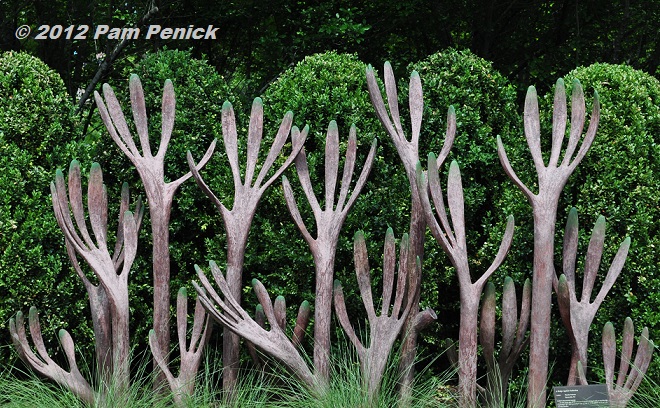
Wicked Plants and good plants at North Carolina Arboretum: Asheville Garden Bloggers Fling
June 02, 2012 The North Carolina Arboretum in Asheville, one of our stops during the recent Garden Bloggers Fling, offers not only formal gardens, naturalistic gardens, a Professional Landscape Garden, and a bonsai exhibit, to name a few, but miles of trails on hilly terrain and framed views of the ...
